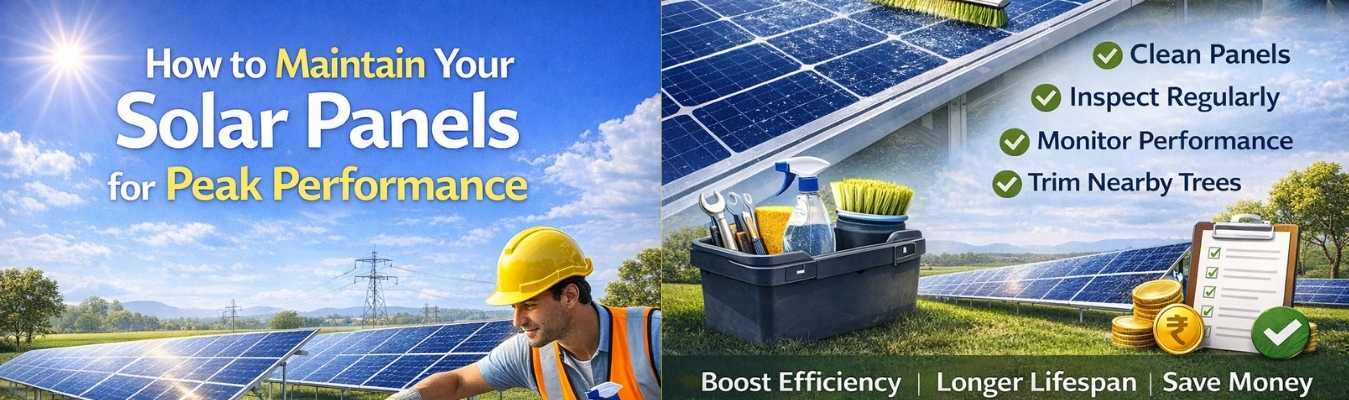
Solar energy is one of the most reliable and sustainable sources of electricity today. Installing solar panels on your rooftop is a great way to reduce electricity bills and contribute to a greener environment. However, to ensure that your solar system delivers maximum efficiency and long-term performance, regular maintenance is essential.
Solar panels are designed to be durable and require minimal maintenance, but simple care practices can significantly improve their energy output and lifespan. In this guide, we will explore practical tips and best practices to maintain your solar panels for peak performance.
Why Solar Panel Maintenance is Important
Regular maintenance ensures that your solar system operates efficiently and continues to produce maximum electricity. Dust, dirt, bird droppings, and other debris can accumulate on the surface of solar panels and reduce their ability to absorb sunlight.
Proper maintenance helps to:
Improve energy production
Extend the lifespan of solar panels
Prevent performance loss
Detect issues early
Protect your investment
Keeping your solar panels clean and properly maintained ensures that you get the best return on investment from your solar installation.
1. Clean Your Solar Panels Regularly
Dust and pollution can settle on solar panels, especially in areas with dry weather or heavy traffic. This layer of dirt blocks sunlight and reduces the efficiency of the panels.
Cleaning Tips
Use clean water and a soft cloth or sponge
Clean panels early morning or late evening
Avoid harsh chemicals or abrasive materials
Use a soft brush for stubborn dirt
In most locations, cleaning your panels once every 2–3 months is usually sufficient.
2. Inspect Panels for Damage
Regularly inspect your solar panels to ensure there are no visible damages such as:
Cracks on the panel surface
Loose wiring
Corrosion on connectors
Broken mounting structures
Early detection of problems can prevent major repairs and system failures.
3. Monitor Your Solar System Performance
Most modern solar systems come with monitoring software or mobile apps that allow you to track electricity generation.
Monitoring helps you:
Identify performance drops
Detect faults quickly
Compare daily and monthly energy production
If you notice a sudden decrease in energy output, it may indicate dirt accumulation or technical issues.
4. Keep the Surrounding Area Clear
Shade is one of the biggest enemies of solar efficiency. Make sure nearby trees, buildings, or other structures do not block sunlight.
Maintenance tips include:
Trim nearby trees regularly
Remove debris like leaves and branches
Ensure no objects are casting shadows on the panels
Even small amounts of shade can significantly reduce solar output.
Conclusion
Solar panels are a long-term investment that can provide clean and affordable energy for more than 25 years. With simple maintenance practices such as regular cleaning, monitoring performance, and scheduling professional inspections, you can ensure that your solar system operates at maximum efficiency.
Taking proper care of your solar panels not only improves energy production but also extends the lifespan of the system, helping you enjoy the full benefits of solar power for years to come.